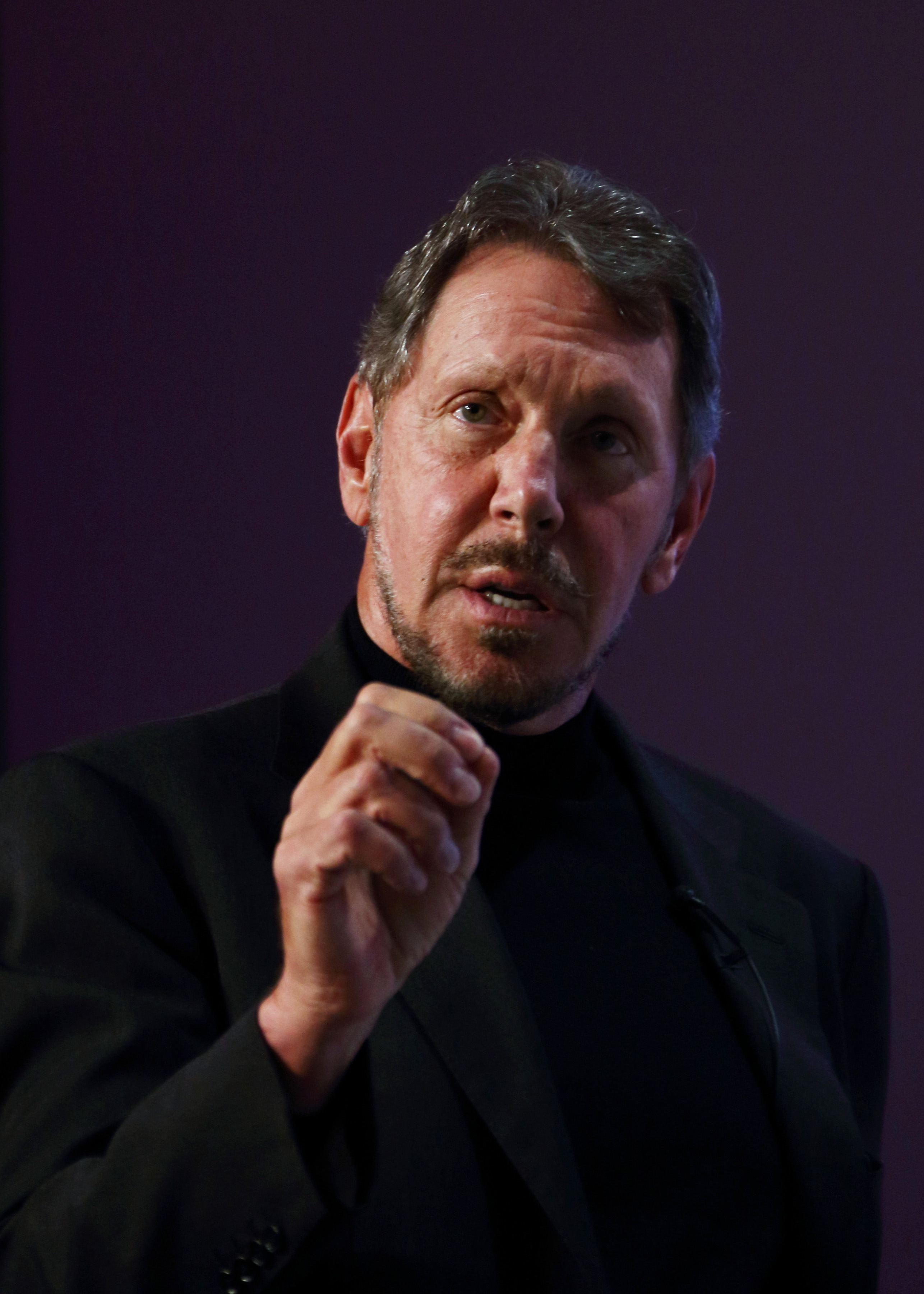
Larry Ellison
> "When you innovate, you've got to be prepared for everyone telling you you're nuts." Larry Ellison owns 98% of the Hawaiian island of Lanai. Not a house on the island. Not a resort. The island itself—141 square miles of pineapple plantations, luxury resorts, and pristine beaches. He bought it in 2012 for $300 million, the way most people buy a vacation home. It was not an investment in the traditional sense; it was a statement. Ellison does not do things halfway. He does not settle for partial ownership or shared control. When he wants something, he buys all of it. Ellison did not build Oracle Corporation by playing it safe. He built it by taking risks that would have destroyed lesser entrepreneurs, by betting everything on technologies that did not yet exist, by outmaneuvering competitors through a combination of technical brilliance and ruthless business tactics. When he founded Oracle in 1977, relational databases were a theoretical concept, not a commercial product. Ellison saw the potential before anyone else and moved faster, building a company that would become the backbone of enterprise computing. Ellison's management style is legendary for its intensity. He demands perfection, tolerates no excuses, and fires executives with the casualness of someone discarding a used napkin. He has been sued by former employees, investigated by the SEC, and criticized for his aggressive sales tactics. Yet Oracle thrived, not despite Ellison's abrasiveness but because of it. He created a culture where winning was the only thing that mattered, where second place was indistinguishable from last place. This made Oracle one of the most successful and most feared companies in Silicon Valley. But Ellison is not merely a businessman—he is a collector of experiences, a man who treats life as a competition to be won. He owns multiple estates, a fleet of yachts, and a collection of fighter jets. He competes in yacht races, not as a hobbyist but as a champion, winning the America's Cup twice. He studies martial arts, flies aerobatic planes, and once challenged a rival CEO to a public debate. Everything he does is done at the highest level, with an intensity that borders on obsession. Yet beneath the bravado lies a more complex figure. Ellison grew up poor, adopted by relatives after his unwed mother gave him up. He dropped out of college twice, drifted through various jobs, and did not find his calling until his thirties. His drive to succeed is inseparable from his need to prove himself, to demonstrate that he is not the failure others once assumed he would be. He once said, "I have had all of the disadvantages required for success," a statement that reveals both his arrogance and his self-awareness. Ellison's legacy is not just Oracle but the example he set: that success requires not just intelligence but audacity, not just vision but the willingness to risk everything in pursuit of that vision.